There’s a line I find myself using when I teach art classes. As I’m taking students through the various materials used for graphite drawing, I’ll demonstrate the kneadable eraser, moulding it to make broad shapes and flat edges and fine points, showing how versatile it is in carving clean highlights onto the page. I’ll then squish it in my fist and say “It also makes a great stress ball.”
What happens next depends on who I’m teaching.
If it’s a class of adult or mature-age learners, they’ll nod. They’ll smile knowingly. They’re all too familiar with feelings of stress and frustration, especially the frustration that might come with producing artwork that… doesn’t quite reach the aims of its creator. The feeling of hours spent at the page with the best intentions and the only thing to show for it are wonky proportions and a dropped pie likeness… it can feel like a disappointment, a waste. We’ve all been there. As far as artists go, stress is a relatable feeling.
But kids? Different story.
I’ve taught school holiday workshops for kids, tweens and teens, and this line never lands. It doesn’t connect. The most I’ll get here is a polite stare and an absent fiddle with the pencil sharpener; for this particular audience, stress and frustration just aren’t part of the equation.
Now, it’s quite possible that an audience this young is yet to reach life stages where situations of true stress present themselves, but I hesitate to suggest this as it risks diminishing valid feelings of hardship or worry or trouble that may be felt in proportion to their years. However, when it comes to experiencing those feelings with the act of making art… well, for kids it doesn’t seem to be there. And when it’s yours truly staring at a page of wonky proportions and a dropped pie likeness, I try to remind myself why.
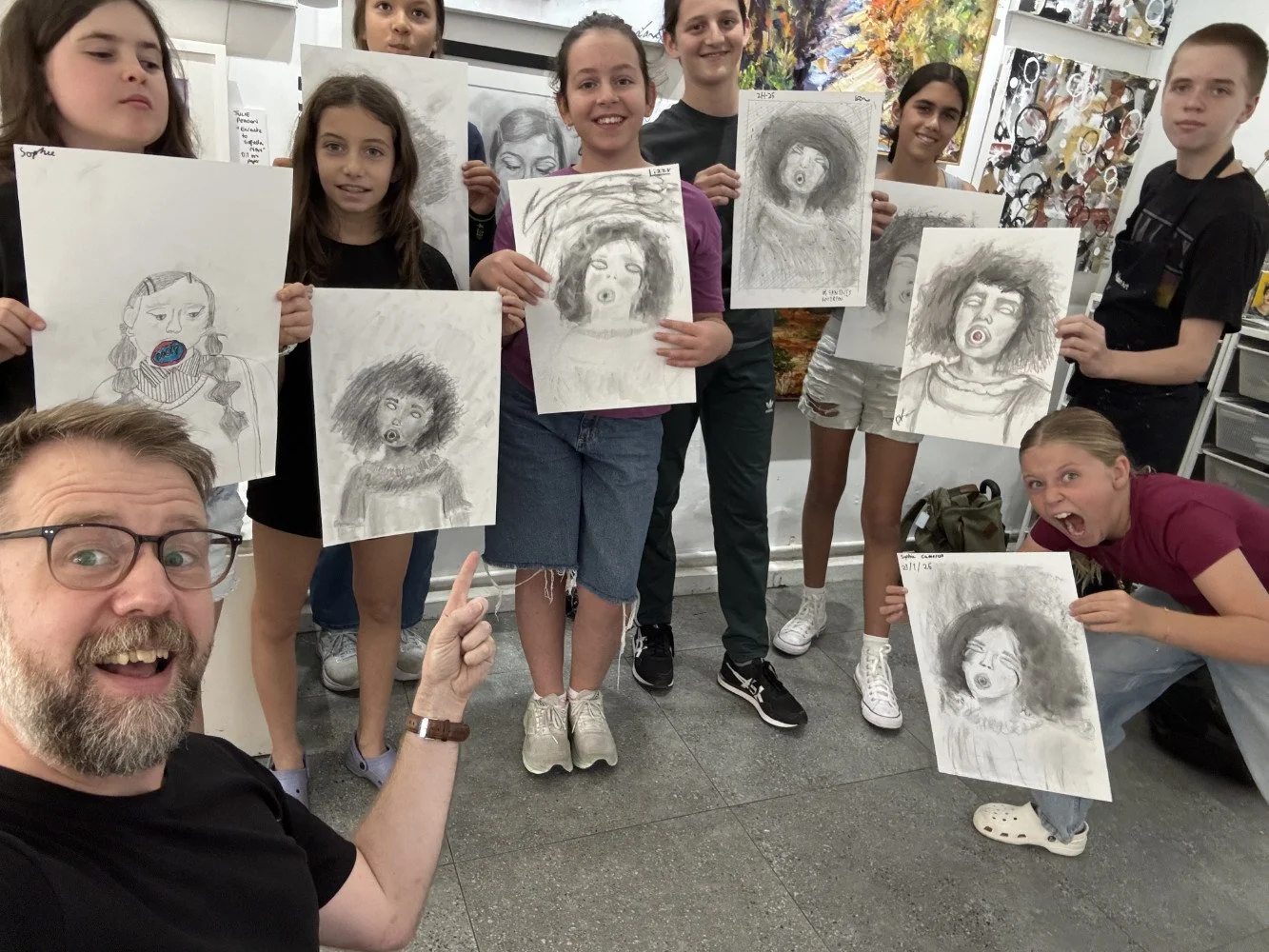
Young artists tackle a couple of my portraits at Studio 71
Through art, kids are exploring. They’re finding all sorts of stuff out just by doing it, by simply picking up the pencil or brush or crayon and just getting in there. There’s no feelings of expectation or preciousness - art is an opportunity. Certainly it’s an opportunity to express and create with freedom, but it’s more than that. In a school holiday workshop environment, it might be an opportunity to use art materials they wouldn’t have at home, or to work with a freedom they don’t have at their study desks in their bedrooms, or even to make a scale of mess normal life can’t or won’t otherwise allow.
Art is an expression, art is a freedom. And as adults, I think we sometimes tend to forget this.
Can you blame us? Real life gets in the way, man. There’s jobs and responsibilities and things we gotta do, and once your brain is in a mindset of working through all that, by the time it brings itself to thinking about making art, it’s hard to shift gears. In a situation where we might only be able to carve out a spare 30 minutes to pick up that pencil or paintbrush, you want to make every single one of those minutes count before real life pulls us back with a load of laundry to dry or kids to pick up from school or a client deck that positively absolutely needs to be pitched first thing in the morning.
If it’s not considerations of precious time, it’s of precious money. Whether you’re forking out for art materials, or for a full-fledged art course, you don’t want to feel like you’re throwing those dollars down the drain. Not when we’ve got food to buy and bills to pay, and have you seen how much fuel is these days? Cozzie livs.
And we haven’t even touched on the idea of grindset hustle culture, to turn the thing you do as a hobby into something of monetary value rather than just intrinsic value. How dare an adult do something for its own enjoyment? Why, that sounds like something that… a kid… would… do…
So when it comes to art, to the time and money we put into it, there’s a pressure for adults to perform, to make it worthwhile. But all it takes is a look at the kids who aren’t side hustling, who aren’t worried about wasting supplies, who aren’t doing something only if it’s going to be good, to see the true virtues of art demonstrated at a vital age, before years of adulting can beat it down.
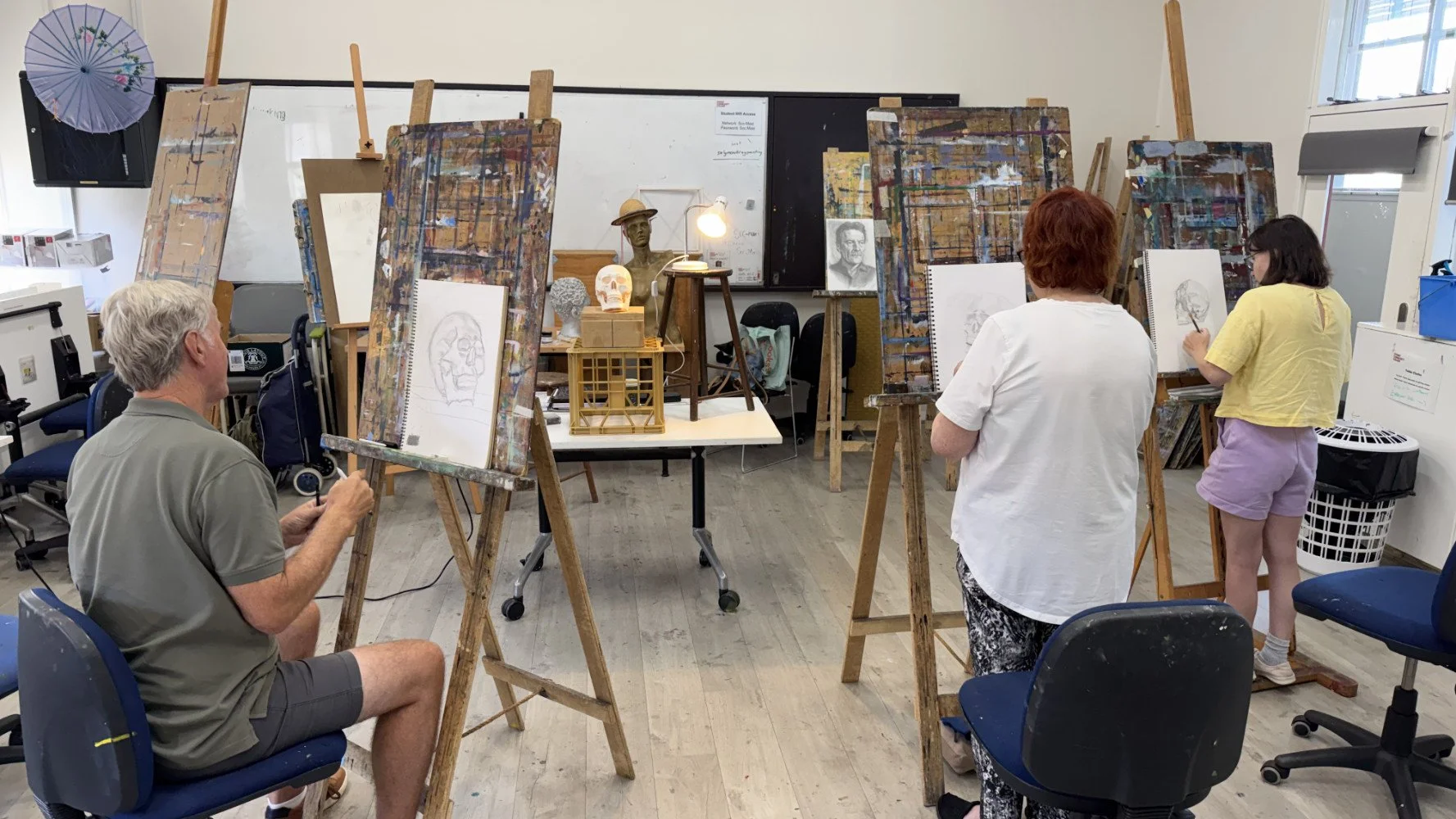
Teaching ‘Graphite Portraiture for Beginners’ at Sydney Community College
As someone who was once a kid, and is now an adult, I try to think what lessons the younger version of me would give to the version with grey beard hairs and borderline cholesterol. Young me enjoyed drawing my own Batman comics or Jurassic Park posters. Young me would lose hours in that process. Young me would probably tell today’s me to remember that feeling, then he’d probably say something like “isn’t drawing fun” or “wow, cool beard”.
It’s equally rewarding to be a part of teaching adult and younger learners, and to see how they engage with the process of bringing a portrait to life. There have been moments from both where one tip or technique or idea will just click, and whether it’s a kid drawing a photo of their dog or an adult working from a life model, their eyes take on an energy of excitement: I tried this and it’s working for me.
For kids, the kneadable-eraser-as-stress-ball line never lands. But that’s okay, because in those classes I’ll sometimes see them moulding it into a little horse, or pushing a smiley face into its surface with the tip of their pencil, and maybe that’s exactly how it should be.